What to eat and drink on the bike: carbs, hydration and a plan by ride length
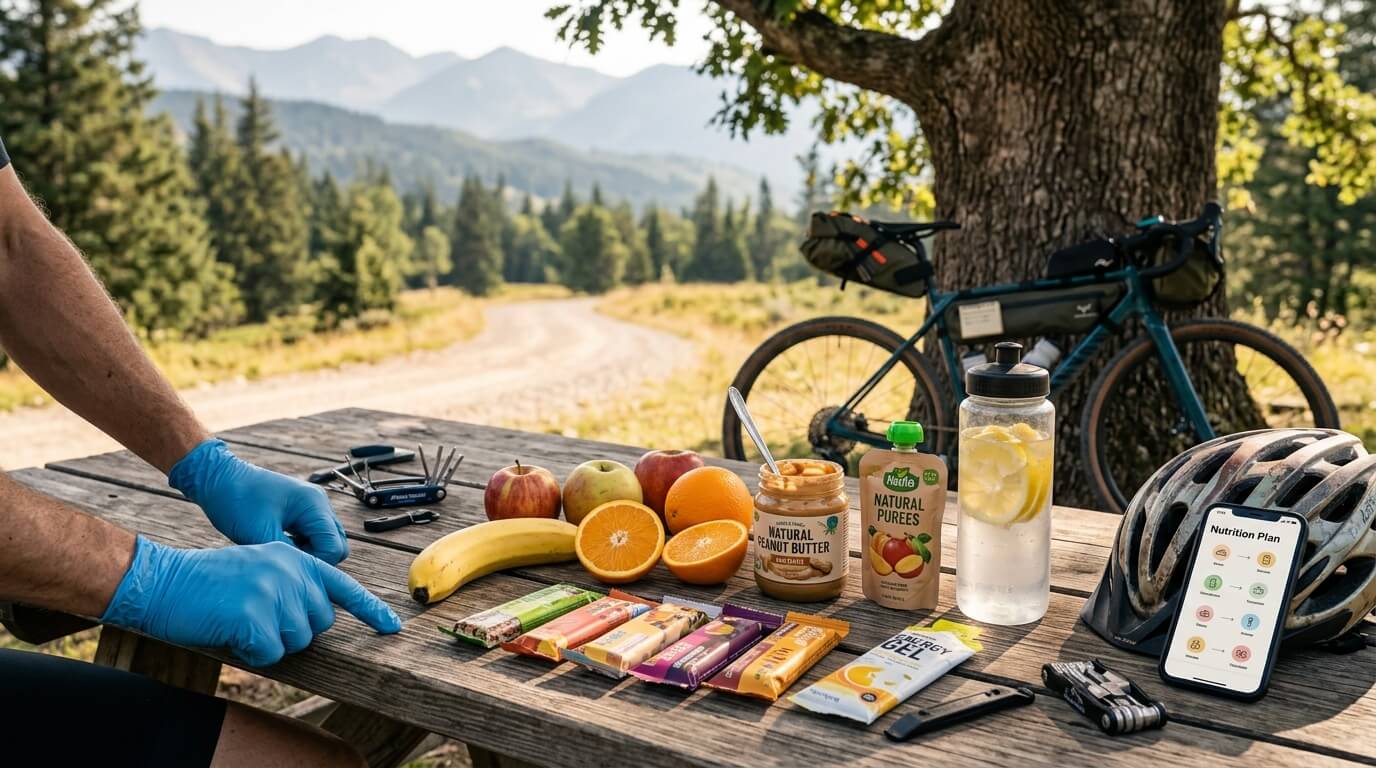
Most of us have bonked at some point: kilometre 90, empty legs, a foggy head and a crumpled gel in your pocket that is now too late to help. The good news is that it is usually avoidable, and not with magic products but with a simple plan: how much to eat, how much to drink and when. This guide gives you rough ranges and a fuel plan by ride length so you can stop improvising.
Why you need to eat on the bike
Your body stores glycogen in muscle and liver, and at endurance pace that supply lasts, at best, a couple of hours of sustained effort. After that, performance drops unless you top up on carbohydrate. Eating early and often is not a luxury: it is how you finish strong and clear-headed.
Everything below is a general range. People tolerate, sweat and perform differently, so treat the numbers as a starting point to refine with practice.
Carbs per hour: how much and what kind
Up to 60 minutes: you typically do not need to take in carbs if you ate well beforehand. Water is enough.
1 to 3 hours: roughly 30–60 g per hour.
Long, hard efforts (3 hours or more): up to about 60–90 g per hour, provided your gut is trained for it.
Going above roughly 60 g per hour means mixing two carbohydrate sources: glucose (or maltodextrin) and fructose. They use different transporters in the gut, so together they are absorbed better than either alone. A common ratio is around 2:1 glucose to fructose, and many sports products are already formulated that way. On the label you will see “maltodextrin and fructose”.
For a sense of quantities, roughly: a gel gives 20–25 g, a medium banana about 25 g, an energy bar 30–40 g and 500 ml of a typical sports drink 25–35 g.
How much to drink, and what about sodium
The typical range is about 400 to 800 ml per hour: the lower end in cool weather or at an easy pace, the upper end in heat, humidity or if you sweat a lot. The most practical approach is to sip every 10–15 minutes instead of emptying a bottle in one go.
When you sweat you lose water and also sodium, which helps you retain the fluid you drink. Losses vary hugely from person to person: some people barely sweat, others finish a ride with salt crystals marking their kit. As a rough starting point, many riders aim for around 300–600 mg of sodium per hour in hot weather or on long rides, and sports drinks or electrolyte tablets supply it without effort.
A simple way to calibrate your sweat rate: weigh yourself without clothes before and after a one-hour ride and note what you drank. Each kilo lost is roughly a litre of fluid you fell short on. If you regularly lose more than about 2% of your body weight, you are probably under-drinking; if you gain weight, you are drinking too much.
A concrete plan by ride length
Under 60 minutes
Start well fed, with a meal or carb-rich snack one or two hours before.
Carry a bottle of water and sip it.
You do not need gels or bars. If the session is very hard, a drink with a little carbohydrate is optional.
1 to 2 hours
Start taking something in around 20–30 minutes, without waiting for hunger.
Target: 30–60 g per hour. For example, a bottle of sports drink (about 30–40 g) plus half a banana or a gel each hour.
A 500–750 ml bottle per hour, adjusted for the heat.
3 hours or more
Eat from the first quarter of an hour and repeat every 15–20 minutes, in small portions.
Target: 60–90 g per hour if your stomach copes; if not, stay at 50–60 g and build up gradually.
Example hour for about 70 g: a 600 ml bottle with 40 g of energy drink mix, a 25 g gel and a few extra sips of water. Swap in a bar or a sandwich when the pace is easy.
Carry sodium: a sports drink, electrolyte tablets or some salty food, especially in the heat.
Refill mid-ride: if you pass through a village, use it to top up bottles.
Real food, gels or drink mix: when to use each
There is no single winner; each has its place.
Real food (banana, ham or jam sandwich, rice cakes, dates): cheap, tasty and easy to digest at an easy pace. Impractical when you are pushing hard.
Gels: compact and fast, ideal in hard efforts or when you do not feel like chewing. Too many in a row can wear out your taste buds and your stomach.
Carb drink mix: covers fluid, energy and sodium at once and lets you raise intake without chewing. A very concentrated mix slows stomach emptying, so dilute with water rather than forcing it.
On long rides most people combine all three, using real food in the calm sections and gels or drink in the hard ones.
What to eat before you set off
A carb-rich meal 2–3 hours beforehand (for example oats with fruit, toast with jam or rice with egg) usually works well. As a general reference, 1 to 2 g of carbohydrate per kilo of body weight. Keep it low in fat and fibre, which sit badly once you start pedalling. If you leave very early, a light snack 30–60 minutes before is fine too.
Train your gut
The gut adapts. If you have never taken more than 30 g per hour, jumping straight to 80 invites trouble. Increase gradually: add about 10 g per hour every week or two on your long rides and see how it sits. Practise at the intensity you will race at too, because the stomach behaves differently at an easy pace than at race pace.
Common mistakes
Waiting until you are hungry or thirsty: by then you are already behind. Set alarms or eat every 20 minutes.
Trying new products on race day: test everything beforehand on long training rides.
Drinking only water on long, hot rides: without sodium you are more likely to feel off; combine water with a sports drink.
Starting to eat late: once the tank is empty it is hard to win the lost ground back.
Forgetting recovery: a meal with carbohydrate and some protein after the ride helps you refuel.
This advice is general. If you have diabetes, kidney problems, high blood pressure, persistent digestive trouble or any other condition, talk to a doctor or a sports dietitian before changing how you eat and drink.
Next step
Pick your next long ride as a testing ground and decide in advance how much you will eat each hour. Afterwards, upload it from Upload activity and give it a name that reminds you what you tried. And if you are preparing that ride with a structured session, browse the workouts in Cyklot to pace your effort section by section.